Perhaps one of the most ambitious learning experiences a teacher can deliver is to make learning memorable for their students. It’s an experience that brings people, place, and program together in a special combination that is often hard to replicate. But it leaves many learners with lasting insights, feelings, relationships, and passion that go well beyond the value of doing well on any test. If more learning were memorable, I think the sense of belonging, connection, and commitment students and teachers have would improve significantly.
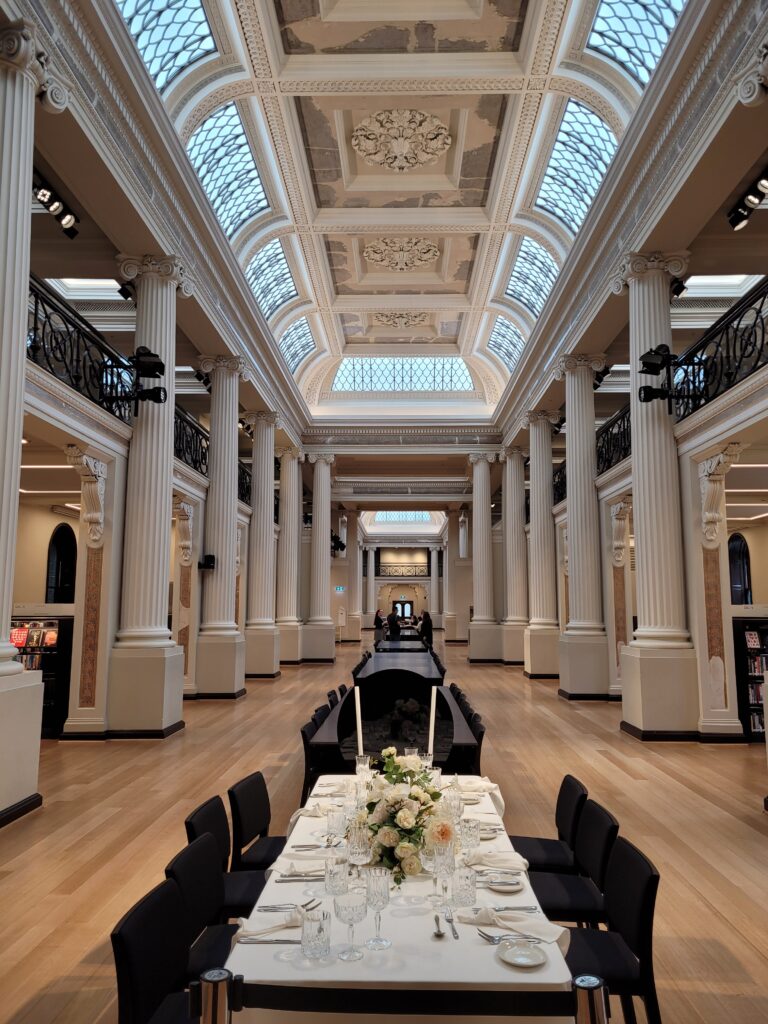
The genesis of ‘making learning memorable’ actually emerged while I was at the State Library of Victoria. It seems ironic that in designing learning within Australia’s oldest public information institution, we came up with an insight that went against the value of memory. Libraries are collectors of memories. Millions of items all capturing different memories of our society and the imagination, decisions, and changes it has gone through. It’s actually why libraries are so cool. The memories they collect are broad, sometimes random, and very specific. Our education team delivered hundreds of school programs every year, trying to help students and teachers note lots of these memories. Everything was important to share. The issue was that when we reviewed the impact, there was little that our visitors actually retained. What stuck the most was the experience they had while they were there, the awe-inspiring reading rooms, the deeper stories that came to life, and the connections they formed. During one of our team deep dives, we suddenly concluded that our learning design was not built on all the memories of the Library, but on how memorable the experience was. We shifted our focus to creating stronger interactions, deeper storytelling, and deliberate ways to connect to the places inside the Library. Less was more. Students would come back on further visits and programs because of what they had experienced. I also started applying the same principles to the Library’s public programs with equal success.
Making something stick in someone’s mind is the current obsession in education. We’re all seemingly committed to managing cognitive load, peppering in lots of Checks for Understanding and recall tactics to make sure students haven’t forgotten what we’ve taught them. The ‘science’ keeps telling us that these are the proven methods for supporting long-term memory. The only issue is that when EVERY teacher in EVERY subject is fighting for a slice of that long-term memory, it’s simply not even possible to expect a student to retain EVERYTHING. We actually know what you do retain this kind of content for – long enough to spit it back in a test or text. This is why schooling is obsessed with memorisation. I contend that a real education is actually committed to something more admirable: the need to help students make memories of their learning. When something is memorable, we connect our mind and body to something more significant and meaningful, and perhaps more emotional. As humans, we value memorable experiences much more; we carry them with us throughout life.
They say that the long tail and ‘long tale’ of being a teacher is the satisfaction of meeting one of your students many years later. If you’re an educator, I’m sure you’ve got a couple of stories about this. I’ve had a few lovely ones. What usually emerges in these interactions is the student reflecting on their time with you as their teacher, and what they remember most. An anecdote from a past student will often reveal what made learning memorable (and sometimes not!). This is where the relationship factor kicks in: the power of people and belonging. There might also be a reference to a unique setting, not the usual classroom: the power of place setting the stage for awe. There would also likely be a connection to the power of the content itself: the way the program created strong insights and impactful outcomes. Why do you think school musicals, sporting events, unique tours and camps are often cited? They broke the routine and expectations of the thousands of hours spent sitting in a classroom.
‘Making learning memorable’ is a powerful design goal. It simply isn’t possible to succeed repeatedly or all the time. That comes with the territory of perseverance and creativity. I’ve carried this mantra with me for a long time. I think this creative frustration was there from the start of my teaching career, as I was always trying to experiment with ways to break the tiring cycles of the classroom so that the students would spark to life. I had some great wins amongst the many dead ends. I’ll never forget the Year 12 student who came to thank me because I ran a Year 9 unit on the horror genre; she said it opened up insights in text and media that stuck with her. I wasn’t proud of my efforts in that moment; I was proud that she found a deeper connection with learning that had become memorable. Only last week, I was speaking with a Primary teacher who’d had the same experience through a kitchen garden program with students suffering from trauma. She’d had to bend the explicit instruction curriculum and content to make it work, but it was every bit worth it, so that some of her students would have something memorable to carry with them.
This learning design principle also became a school mantra. I used to throw this design ambition around while I was at NoTosh. My colleague Ewan McIntosh was working with The American School of Warsaw and inserted it into their strategic planning. It galvanised them to pursue meaningful learning experiences over rote memorisation. Their strategy framed the ambition as “our learning makes memories.” It is these kinds of reminders that raise the bar for educators and potentially a whole school community. We stop being satisfied with students who can recount and recant, and start looking for the ingredients that help students ‘escape themselves’ in what learning can mean for them. All of our expectations grow, as does the sense of belonging and purpose.
Start asking your learners what was memorable about their week, their month, or their year. Ask your Year 12 students what the most memorable experiences were of their 13 years at school. I doubt their reflections will have much to do with the routine of schooling. Perhaps the most striking feedback might be that you’re met with silence. When a student has nothing memorable to note about their education, then the system is failing to ever make lifelong learning a goal. ‘Making learning memorable’ might be the horizon we should all chase, bringing the levity and power of deep learning closer to us all.