This post is largely combined from a comparison I shared on StereoNet back in June 2024. It was at the juncture of revamping my hifi system, where I’d recently switched to new speakers (the Sonus Faber Sonetto) and had decided to switch one of my sources as well: the CD player.
I’m sure CD players all sound the same to some folk. You could buy a $40 DVD player from a discount store and still be impressed. After all, they only need a laser, power and circuitry to playback a CD. But like any analogy with cars, furniture, or electrical goods like TVs or fridges, you often get what you pay for. Pay more, and you get better quality, better components, better features, and often a better experience.
CD sources are a really important source in a hifi-chain. When buying a reasonably decent one (I would say around $2,000 or less), you often have two options. A CD player: which has the circuitry to play a CD by only being connected to an amplifier. Or a CD transport: which can only play a CD but has no circuitry to produce the sound, so it needs to be connected to a DAC (Digital-Analogue Converter), which is then connected to an amplifier. DACs are a whole other beast of a discussion I’ll get into another time, but I’ve always been happy with a CD player that already has a DAC built in. Yes, you can’t customise it to sound different, but it’s like buying a nice car for its design and engine. I don’t buy nice cars to customise their functionality. But I am intrigued by it, and I certainly customise other bits to play around with the sound quality and style from my hifi.
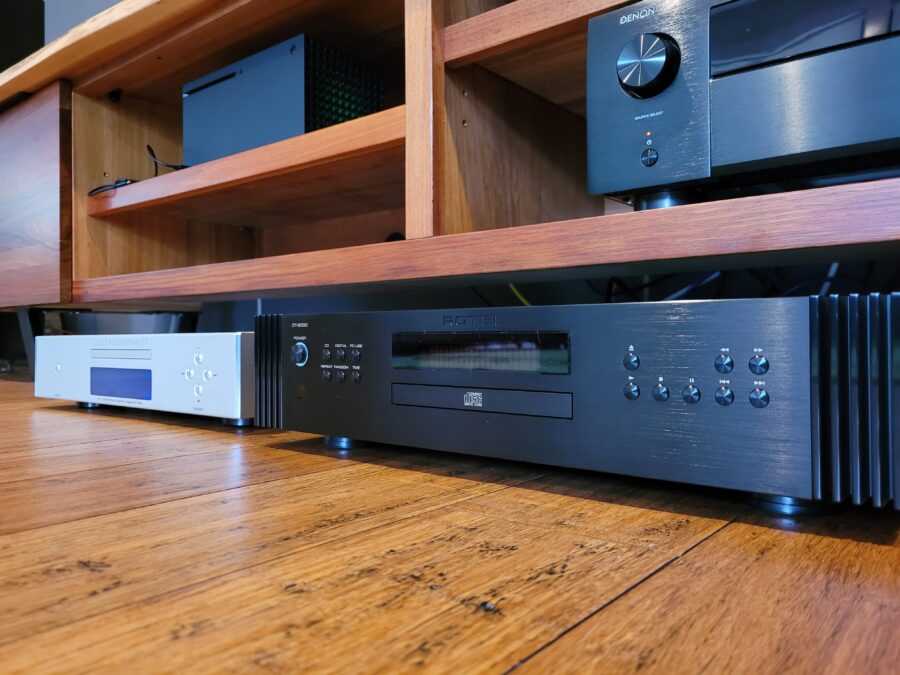
So here’s my experience transitioning from my old CD player (an Electrocompaniet PC-1 from Norway) to my current CD player (a Rotel DT-6000 from Japan). I ran this comparison using Chord analogue cables into my Denon x4500H AVR, playing through a pair of Sonus Faber Sonetto III. I kept the volume consistent at 60 dB for both players. Here are their basic specs:
PC-1 (silver) – processing 24-bit/192kHz using Cirrus Logic DAC, weighing in at 4kg. It was 10-years old at the time and was purchased for around $1500.
DT-6000 (black) – also processing 24-bit/192kHz using ESS Sabre 8-Channel ES9028PRO DAC, weighing in at 8.1kg. Diamond Series (Rotel’s 60th Anniversary). Purchased for $1750.
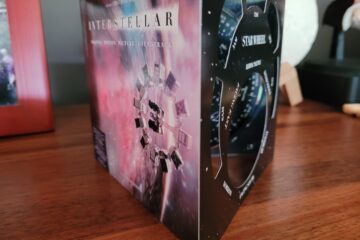
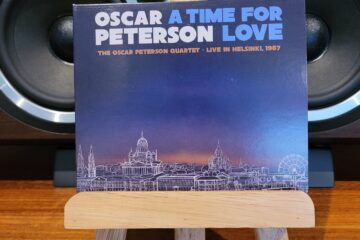
I played a selection of 6 discs through both. I chose CDs that all have very good audio production (in my opinion) and have great first tracks kicking off the album.
The CDs were –
- The Colonel & the Governor (Tommy Emmanuel & Martin Taylor) – I Won’t Last a Day Without You
- Laufey, Bewitched – Dreamer
- Hiromi, Silver Lining Suite – Isolation
- Honne, Love Me Love Me Not – I Might
- Michael Jackson, The Essential – Bad, (and) Man in the Mirror
- Chemical Brothers, Come With Us – Come With Us
The form & function –
PC-1: Brushed silver metal face, black metal body. Minimalist with a nice size display. It’s always bugged me that I have to hold down the ‘Stop’ button to open and close the tray; a strange design decision. The tray is also very shallow, I’ve had a few CDs get caught in the closing mechanism when I’ve not made sure the CD is neatly in the tray. It’s also been a ‘noisy’ unit, making a whirring noise on load-up and running. Autoplay is a good feature.
DT-6000: Brushed metal black with designed grooves at each end of the face and a black metal body. I do like the ‘industrial’ style of its design; like it means business. All the buttons have a lovely tactile push-feel. The tray is a better design to slide CDs into. The tray also opens and closes quietly and quickly, though the load time is slower than the PC-1 by a couple of seconds. Display provides more detail so text is smaller, but can be made brighter. One bugbear that will take getting used to is there is no setting for autoplay, so you have to wait until the CD has loaded then press play; though this kind of adds to the routine of ‘slowing down’ to listen to a CD.
The performance –
PC-1: Across the listening of the tracks, the PC-1 could best be described as clear, precise, and bright. It shows good separation in instruments, feeling balanced with good strong soundstage and great punch and weight to the bass. The trebles do feel quite bright and crisp, building nicely into crescendos of music with lots of detail.
DT-6000: The soundstage envelopes the listener from the get go. There’s a richness, almost warmth to vocals, and an all-round resonance. It sounds dynamic and balanced, though at times the bass is less present, showing the ability to reveal the true quality of the audio production. It sounds less fatiguing than the PC-1, with more authentic sounding instruments, especially on pianos and guitars. Good to see that the gapless playback has been addressed in updates since first launch.
Outcome
I am very happy with the Rotel. I can certainly appreciate the difference in the decoding of music compared to the PC-1. I would have to concede that some CDs sounded better through the PC-1, such as Michael Jackson (with the legendary mixing of Quincy Jones), hence why I played ‘Man in the Mirror’ to also compare, perhaps because the PC-1 has a brightness that makes music sparkle. However, the Rotel nailed artists like Tommy Emmanuel, Laufey, and Hiromi, showing its ability to reproduce jazz with depth, presence, and detail. When it comes to more bass-heavy pop and dance, both players showed strengths, so it’s a tough call on this one. It’s also surprising that the Michi Q5 CD player (a flagship model also made by Rotel) uses the same DAC chipset as the DT-6000 (but has a different power configuration, design, and weight), and retails for around $9,000! More than 3 times the price! Maybe at this point, we’d have to acknowledge the diminishing returns of spending this kind of money.
As I have worked my way through my CD library, I’ve appreciated the other differences and benefits of the DT-6000, including being able to run a music streamer through its DAC. It’s clearly a powerhouse, capable of reproducing music that immerses the listener, and had me staring in disbelief at how it brought familiar tunes to new life. I still miss my EC player every now and then; sometimes I wish I hadn’t sold it. It hopefully illustrates just how CD players can sound different, bring different details to the surface, and keep folk like me wondering – how might it sound different next time?