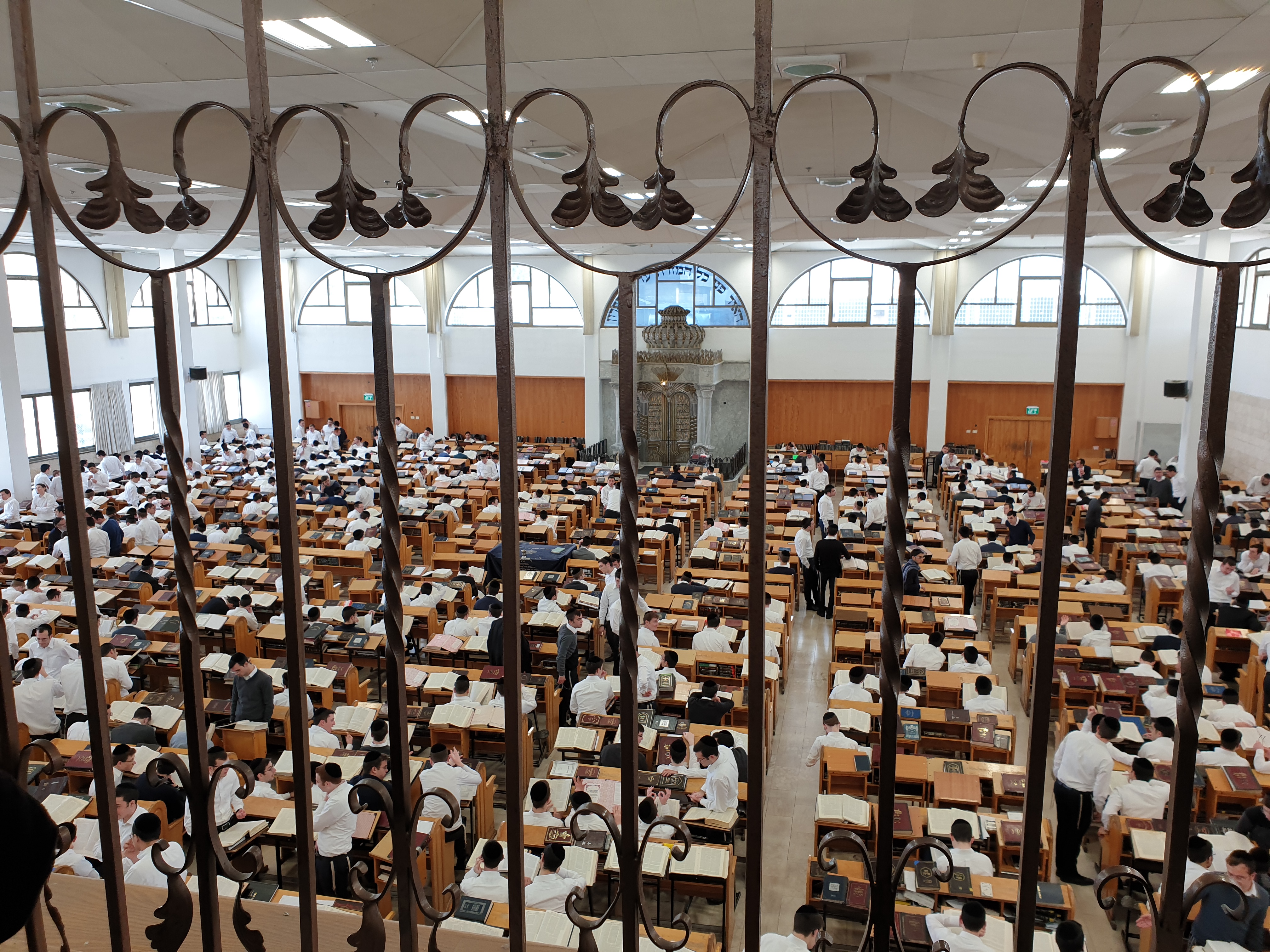
Everything old is new again, as they say. Sorry, but it’s actually not. What I’m referring to is the current education zeitgeist around explicit, modelled instruction, often summarised as ‘I do, we do, you do.’ Regardless of how people and systems are embracing this, there’s very little that’s new about this. Sure, you get fancy infographics and snappy titles, but under the skin, there are teaching and learning elements that have been around for decades.
The ‘explicit-believers’ went underground in the early 2000s with the advent of the Melbourne Declaration and the great push for skills and capabilities, and breaking the mould of the factory model of education. Every keynote and workshop pushed this ambitious agenda, touting inquiry and ‘learning without walls’ as the next frontier of education. It was a crazy time of idealistic and experimental teaching and learning. I was lucky enough to be leading a Year 9 City Campus program at the time where these elements of different learning modes were realised on a daily basis. Our core was having independence and responsibility as foundational principles of the city-based program, with Community, Communication, Culture and Environment as the building blocks. It was the most incredible teaching and learning period of my life. But within the office walls of that program, you would have also seen a lot of chunking, recall, and think-pair-share going on; basically managing cognitive load. As educators, we placed a heavy emphasis on inquiry, but used explicit methods to lay the groundwork and also teach regular subjects.
When I moved to the State Library, the agenda for project-based, value-based, and real-world learning only amplified. It was almost like a mini-renaissance, with different minds, professions and industries coming together to try and solve wicked problems. It was the age when co-working became the physical manifestation of these philosophies – some schools even tried to model their designs and programs around it, which led to the open-plan wave of school space design. There was just one big problem: the balancing factor needed to kick-in. And now in 2026, explicit instruction and desks in rows with choral responses has kicked in super hard.
I know that I’m not alone in calling for balance. Balance is needed EVERYWHERE in our world. Our world is constantly spinning to extremes, and the Science of Learning crowd can’t see that they are sitting in one of those extremes (just like the inquiry fans did). My 30-year career of learning and networking has shown me one thing clearly: extremes are unsustainable. Don’t get me wrong, I think there are some genuinely effective, relevant, and reliable teaching tactics in explicit instruction. If you want kids to be good at tests, it’s a guaranteed winner. NAPLAN scores will almost certainly go up – pundits and politicians will rejoice. But when that is the model used ad-nauseam for over 10 years of schooling, you’re creating a complacent and compliant generation of kids. Inquiry learning is no different. You can’t move from one PBL to the next and assume something is being learnt about core concepts, let alone develop the literacy and numeracy skills to navigate so many different information contexts.
I’m heavily simplifying, of course. I don’t want to waste the space to go into all the nuanced details, as I’ve probably offended some readers already! I’ve worked at nearly every spectrum of learning, so I get the pros and cons, and the contexts where these teaching and learning approaches work effectively. In my experience, it works most effectively when there is a balance of BOTH explicit and inquiry approaches underpinning the delivery and experiential model. Which brings me to the title of this post: 3 days, 3 ways. It was a phrase introduced to me during my teaching degree in the early 1990s; I think it has its roots in the 1980s teaching movement, but also in the training sector or maybe early childhood (both wouldn’t surprise me). In simple terms, if you want anything to be learnt well and locked in long-term memory (we hope!), teach the concept over 3 days in 3 different ways. Time, space, and method are core to this principle. It requires the teacher to have mastery of the content, but also the adaptability to deliver the learning experience in ways that might cut through to learners differently. One method is not enough, and no, I’m not talking about just using a think-pair-share followed by a choral response. Context and application are key here. If you think your method works, then in the next lesson, give the students a scenario and see if they can apply the practice.
I remember designing this with some stern maths teachers who wanted the ‘correct process’ followed for teaching elements of probability and exponentials: theory THEN practice. Until I gave them the provocation of surviving a zombie outbreak. What transpired was a realisation that the zombie outbreak would give students a reverse way to apply their basic algorithms, but get stuck in understanding the full picture without further knowledge and skills. Once the theory kicked in when they got stuck, the maths teachers reported lots of ‘aha!’ moments… some might even say the students were pretty engaged. This is low-hanging fruit for ‘3 days, 3 ways’. In fact, the Rule of 3 has popped up a lot in the learning design contexts I’ve been part of… now there’s a whole other post!
The core problem is that it requires teachers (and schools) to give up time, contexts, and creativity in service of concepts that are truly worth learning. Both ends of the learning spectrum suffer if they stick to their guns. Not immediately, but over time. Students (and teachers) become comfortable and complacent with a learning mode that is easily predictable and repeatable. I’m waiting for a teacher to follow a student around for a week and see how it feels to be on the receiving end of endless explicit instruction. We’re facing the real threat of losing balance in education, but also losing balance in our diets, our media consumption, our waste production, our extreme opinions, our preferences, our networks and ultimately coming out as ‘unbalanced’ adults. The imbalance in learning and health patterns is everywhere.
As an aside, that’s why I wrote 3 posts over 3 days on 3 topics that interest me. If we don’t push ourselves into other contexts, we can only adopt what we’re served, not adapt to what’s possible.